
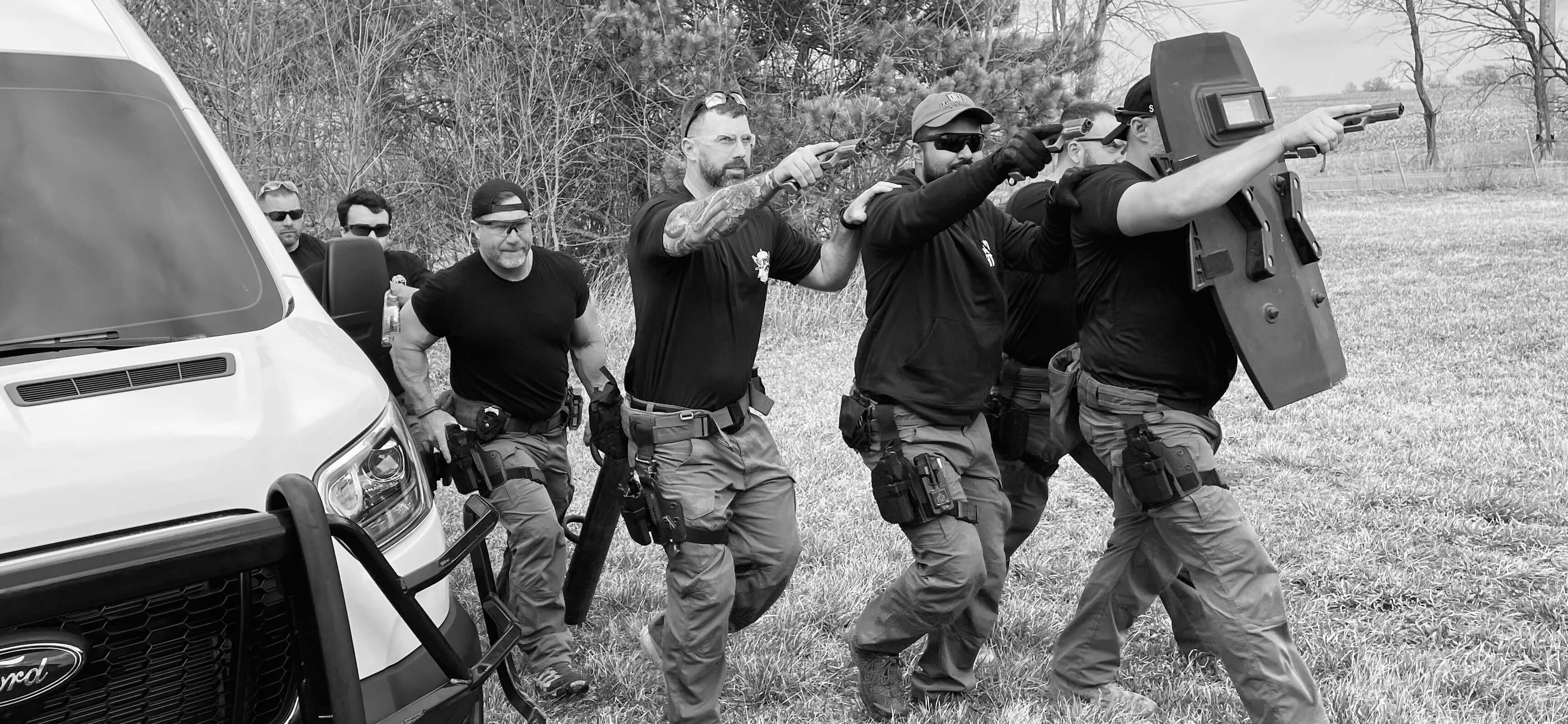
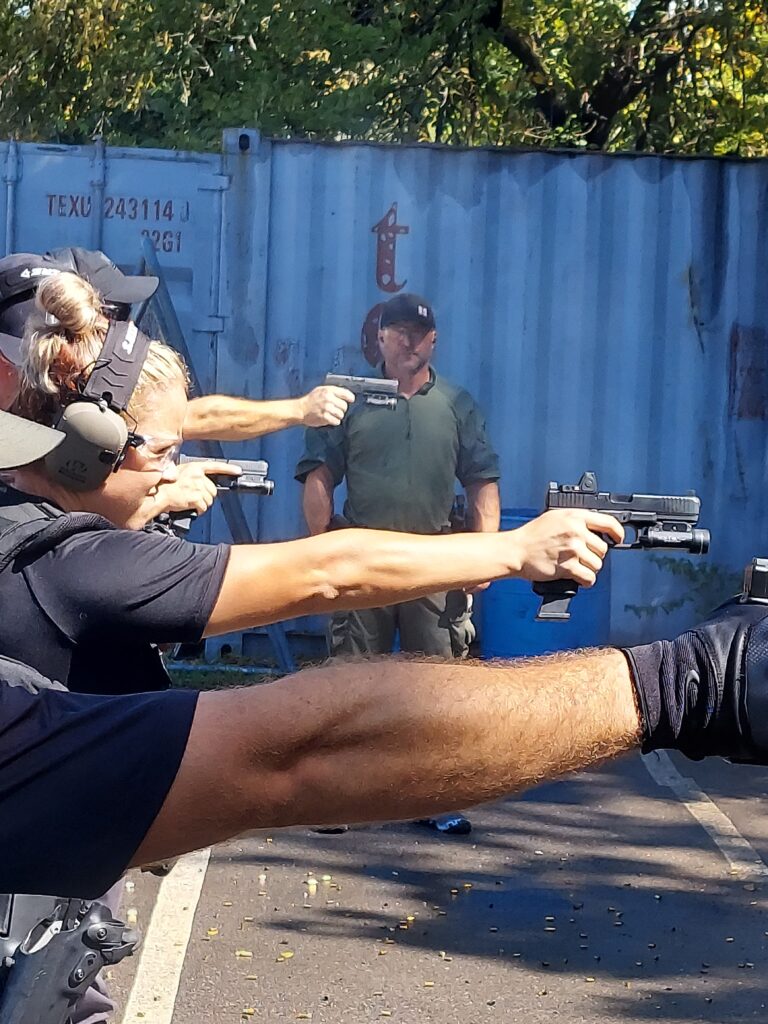
Have you ever asked an instructor a question, only to be met with the response “range safety”? It’s a common phrase, but is it the real story? Maybe, maybe not.
Using “range safety” as a conversation stopper can make a person seem authoritative, but it’s often used by those who are uncertain or unprepared. In reality, the true concern should be preparing individuals for the necessary task to avoid operational risk. I am by NO means saying range safety is not important. We’ve all identified the four Cardinal Rules of Firearms Safety enough times to make our heads hurt. But are you, as an instructor, using “range safety” as a crutch to make range days easier to plan and/or difficult students easier to handle? If so, take a close look at the ranges you run and give an honest review of whether you’re training your people for a qualification course or for a gun fight.
Focusing on making range days easy is insufficient. It’s like putting duct tape on a flat tire – it may look good in the moment, but it won’t hold up in the long run. If training only involves static shooting, the range may be safe, but the individuals may not be ready for real-world scenarios. The goal should be to properly prepare individuals for combat scenarios with an active and violent suspect.
The word “safety” can be a get-out-of-explaining free card. It would seem reckless to question anything that has the word safety as its reasoning. Can I pick up my empty mag that I dropped at my feet during the drill while the guy 5 feet to my right is shooting? “No, Range safety.” Can I move obliquely back away from my target as I draw and shoot? “No, range safety.” Can I move 3 inches ahead of someone else on the range when they are 50 feet to my left? “No, range safety.” If we’re honest, we can all think of range safety rules that don’t really make much sense but we never question them. After all, we don’t want to look like the unsafe shooter.
You get the idea – the range safety lie is an accepted way to end questions, comments, and concerns without actually having to explain why you aren’t training in a specific way.
The relevant issue here is not the well-being of the range. The real concern is failing to prepare our people and as a result, creating operational risk for them.
Injury and death occur in the real world because people are woefully unprepared for the required task. If your range time consists of slow methodical static test taking, the range will be fine, but your people may not be.
Take time to really reflect on your rules and decide if they’re actually necessary for the safety of the range. If a drill would offer great training to prepare officers for real combat situations, do the extra work to MAKE the drill safe. Don’t automatically rule it out and use “range safety” as the crutch to lean on!
Prepare your people for a gunfight, not a qualification course!
Enjoy content from Guardian Training Solutions? Make us one of your preferred sources on Google.